Label: COLUMBIA
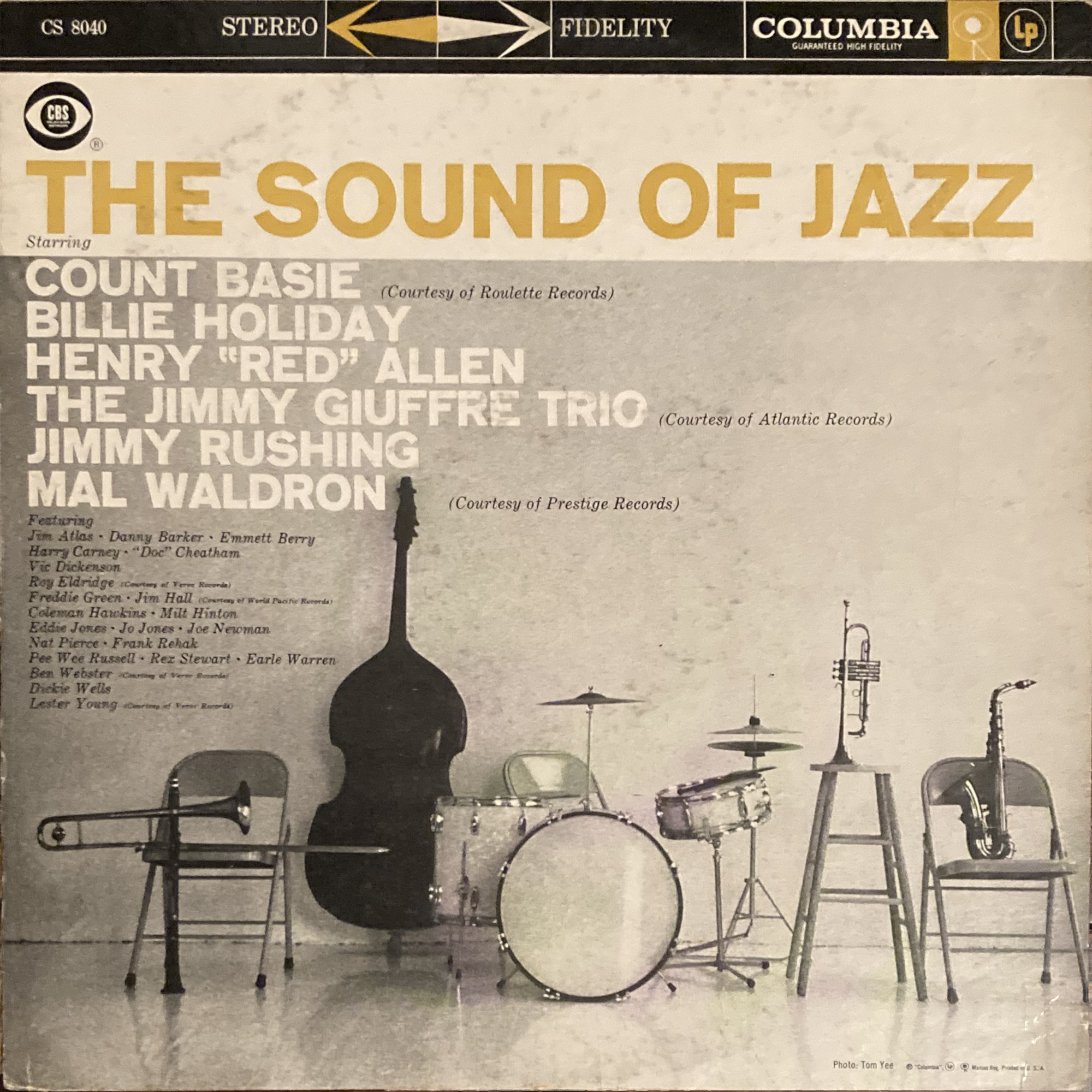
No.: CS 8040
Title: THE SOUND OF JAZZ
Musician: V. A.
Recorded: 1957/12/8
Stereo
Promotion
Cover address:
Coating無し
Groove Guard
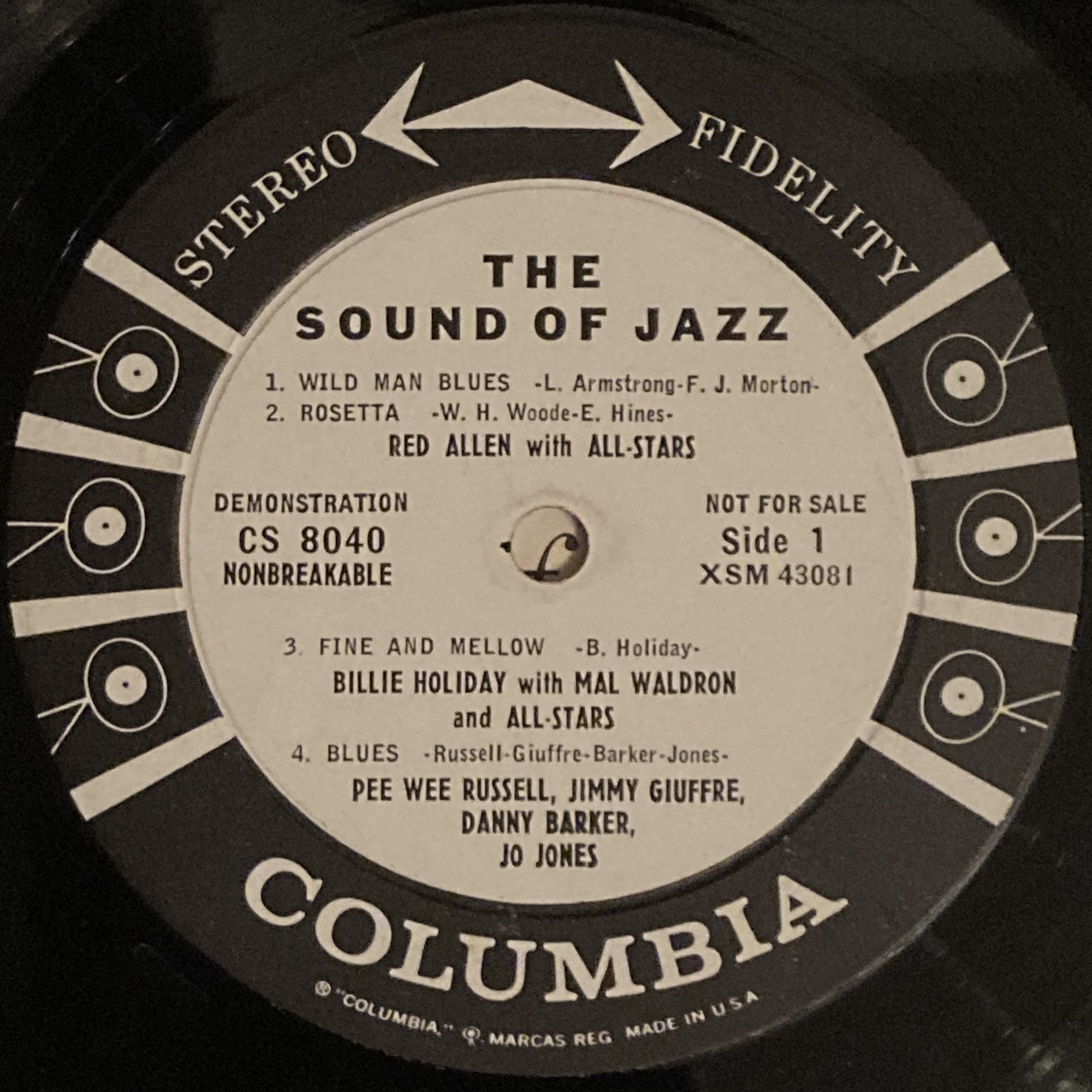
Label Side-1
White & Black Background
Black Letter
6Eyes without CBS
Promotion
Address: None
Deep Groove
Dead Wax Info: XSM 43081-1G
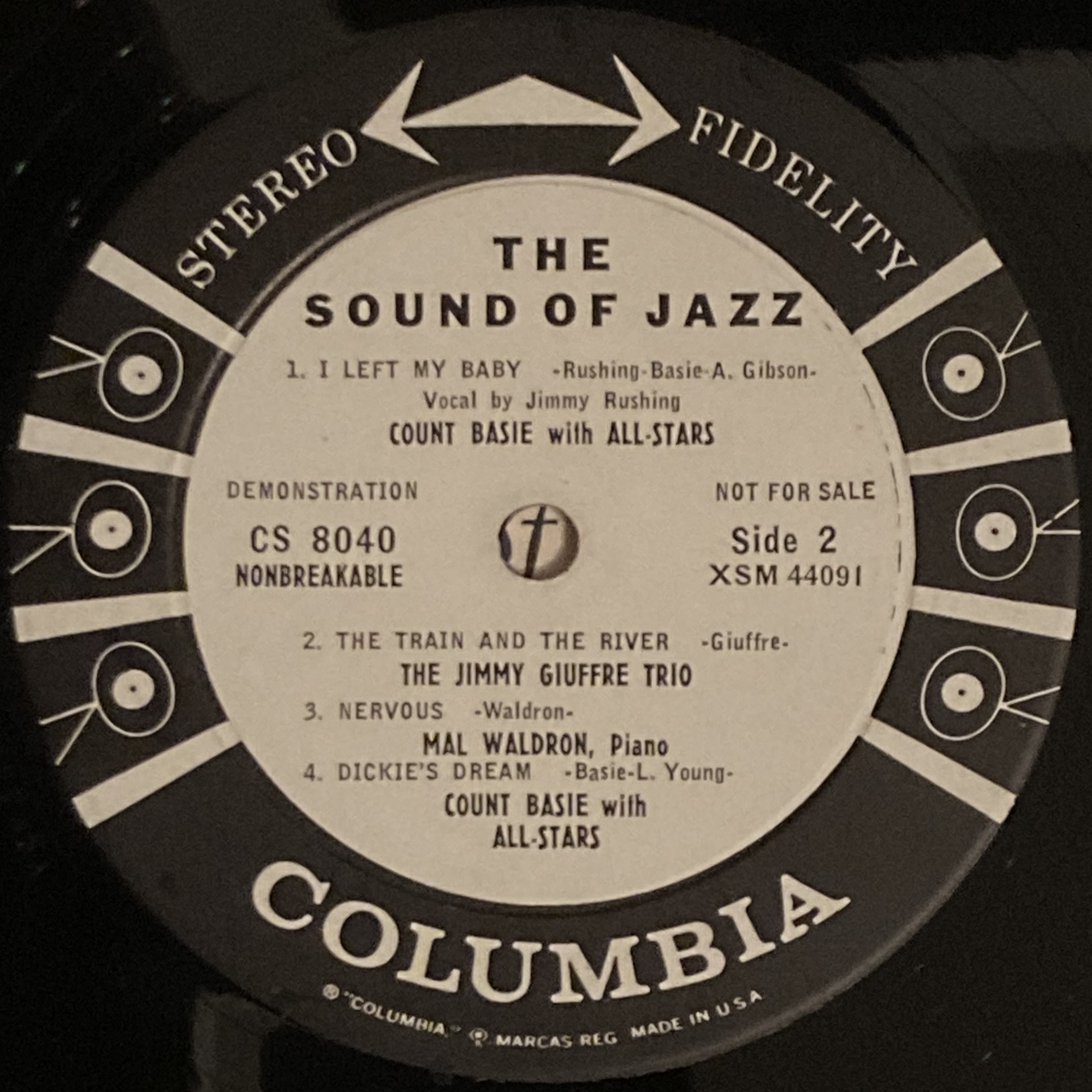
Label Side-2
White & Black Background
Black Letter
6Eyes without CBS
Promotion
Address: None
Deep Groove
Dead Wax Info: XSM 44091-1L
Personnel- Side1-(1),(2)
Bass: Milt Hinton
Piano: Nat Pierce
Tenor Sax: Coleman Hawkins
Trumpet: Henry “Red” Allen, Rex Stewart
Trombone: Vic Dickenson
Clarinet: Pee Wee Russell
Guitar: Danny Barker
Personnel- Side2-(4)
Count Basie All Stars-
Drums: Jo Jones
Bass: Eddie Jones
Piano: Count Basie
Trumpet: Emmett Berry, Doc Cheatham, Joe Newman, Joe Wilder
Trumpet, Flugelhorn: Roy Eldridge
Trombone: Vic Dickenson, Benny Morton, Dicky Wells
Alto Sax: Earl Warren
Tenor Sax: Coleman Hawkins, Ben Webster
Baritone Sax: Gerry Mulligan
Guitar: Freddie Green
Personnel- Side2-(1)
Count Basie All Stars-
Drums: Jo Jones
Bass: Eddie Jones
Piano: Count Basie
Trumpet: Emmett Berry, Doc Cheatham, Joe Newman, Joe Wilder
Trumpet, Flugelhorn: Roy Eldridge
Trombone: Vic Dickenson, Benny Morton, Dicky Wells
Alto Sax: Earl Warren
Tenor Sax: Coleman Hawkins, Ben Webster
Baritone Sax: Gerry Mulligan
Guitar: Freddie Green
Vocals: Jimmy Rushing
Personnel- Side1-(3)
Drums: Osie Johnson
Bass: Milt Hinton
Piano: Mal Waldron
Tenor Sax: Coleman Hawkins, Ben Webster, Lester Young
Baritone Sax: Gerry Mulligan
Trumpet: Roy Eldridge, Doc Cheatham
Trombone: Vic Dickenson
Vocals: Billie Holiday
Personnel- Side1-(4)
Drums: Jo Jones
Bass: Milt Hinton
Clarinet: Jimmy Giuffre, Pee Wee Russell
Guitar: Danny Barker
Personnel- Side2-(2)
Bass: Jim Atlas
Clarinet, Tenor Sax, Baritone Sax: Jimmy Giuffre
Guitar: Jim Hall
Personnel- Side2-(3)
Piano: Mal Waldron
Tracks-
Side-1
1) Wild Man Blues
2) Rosetta
3) Fine and Mellow
4) Blues For a Playboy
Side-2
1) I Left My Baby
2) The Train and the River
3) Nervous
4) Dickie’s Dream
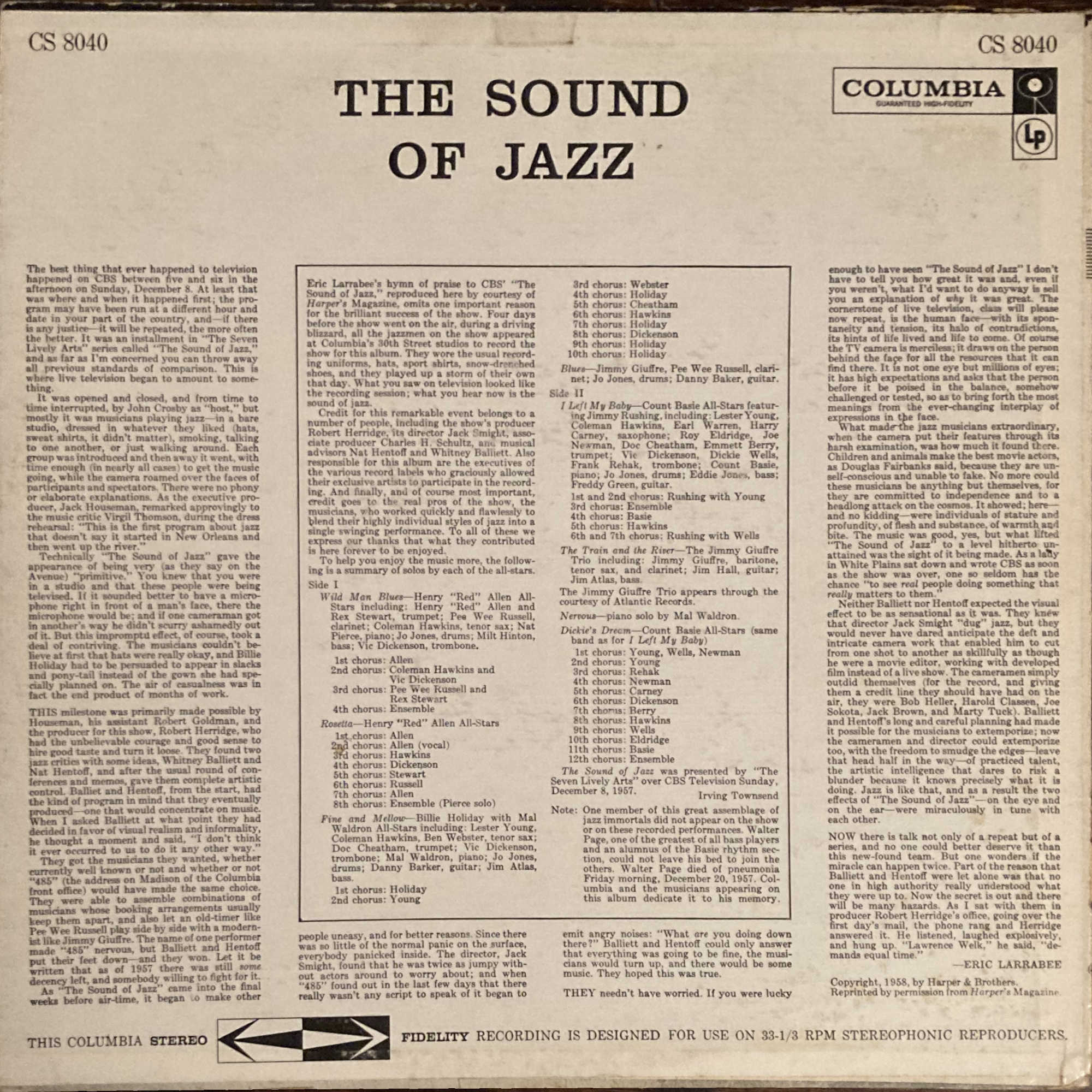
<裏ジャケ原文>
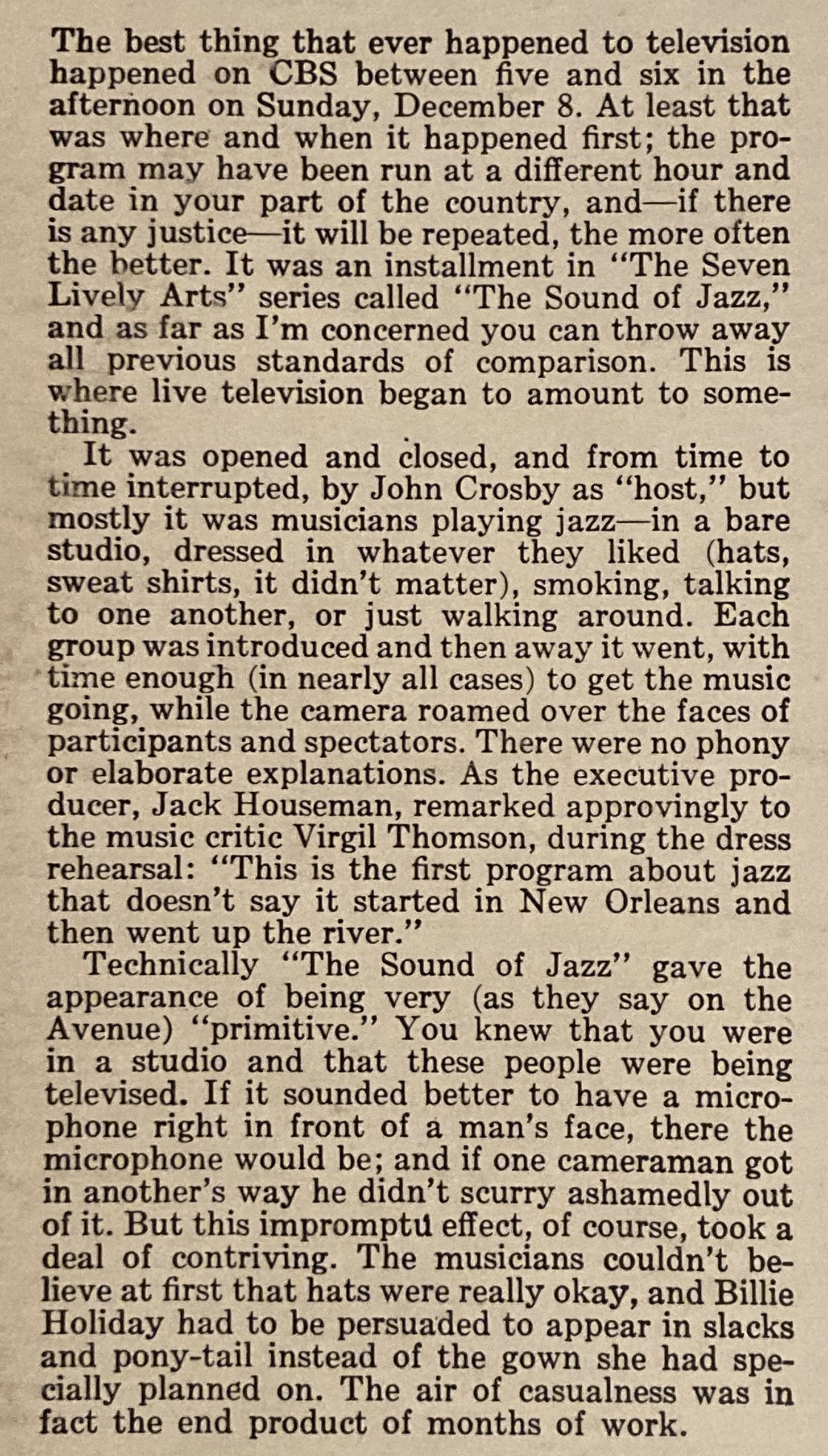
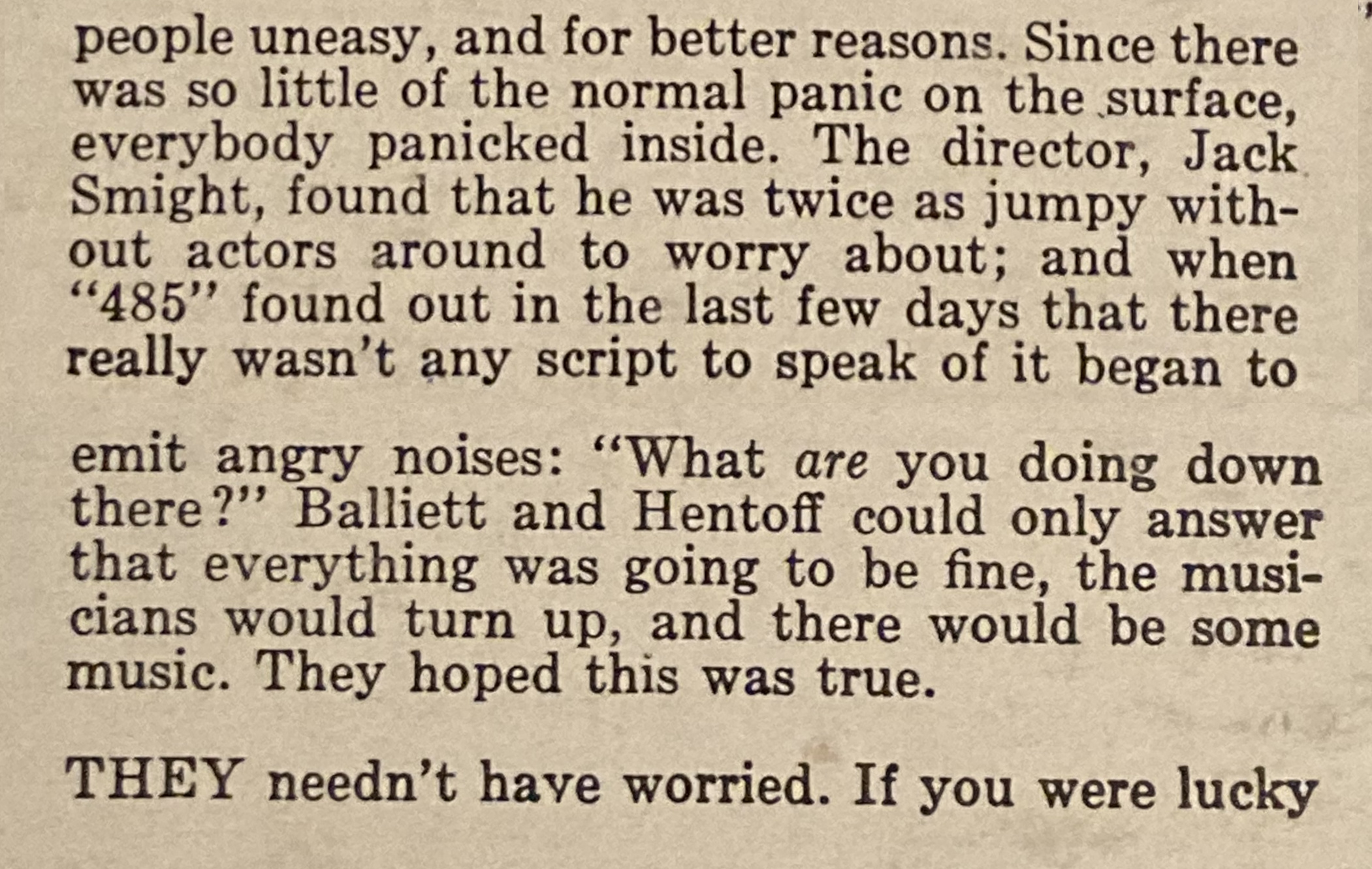
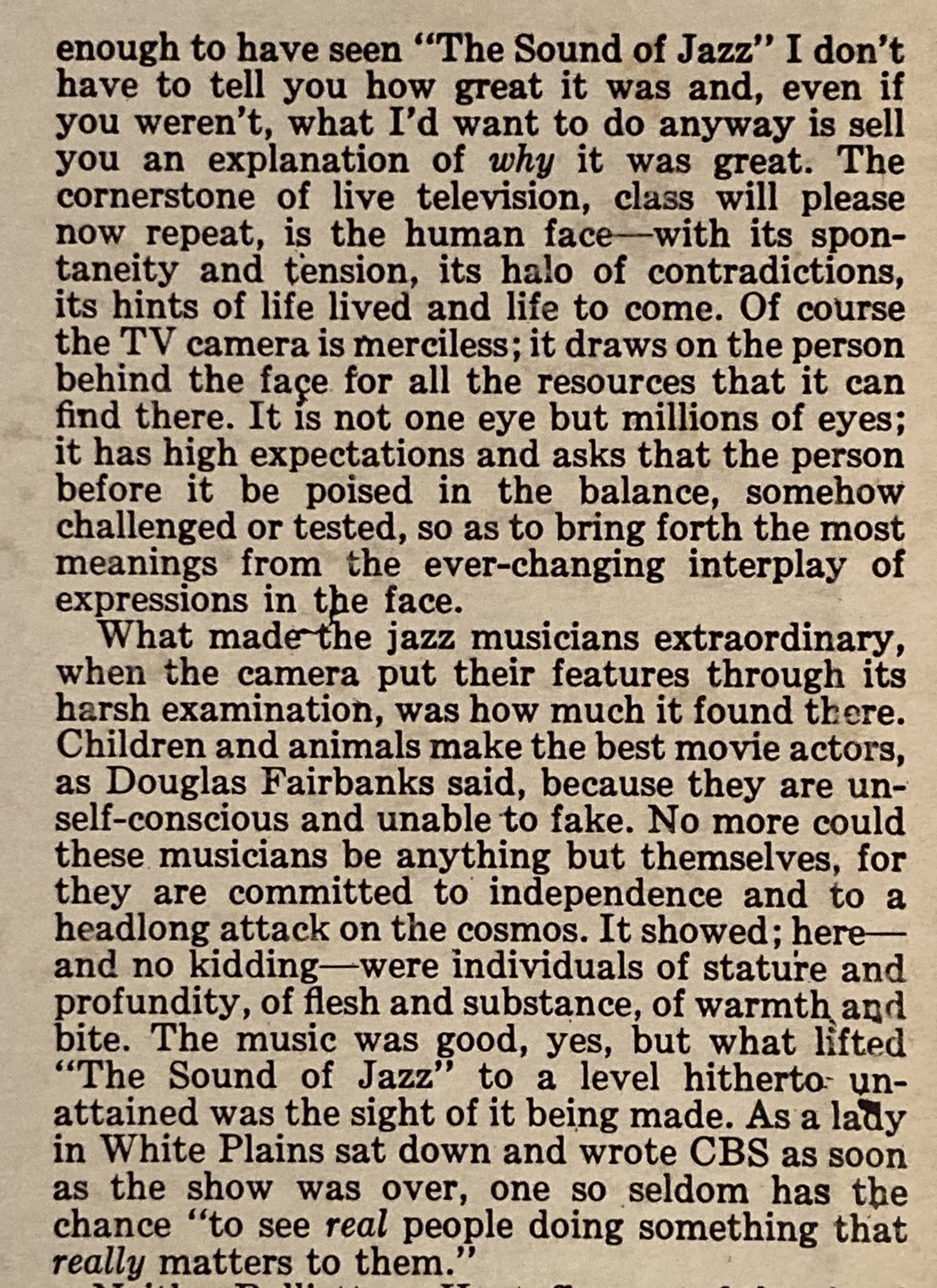
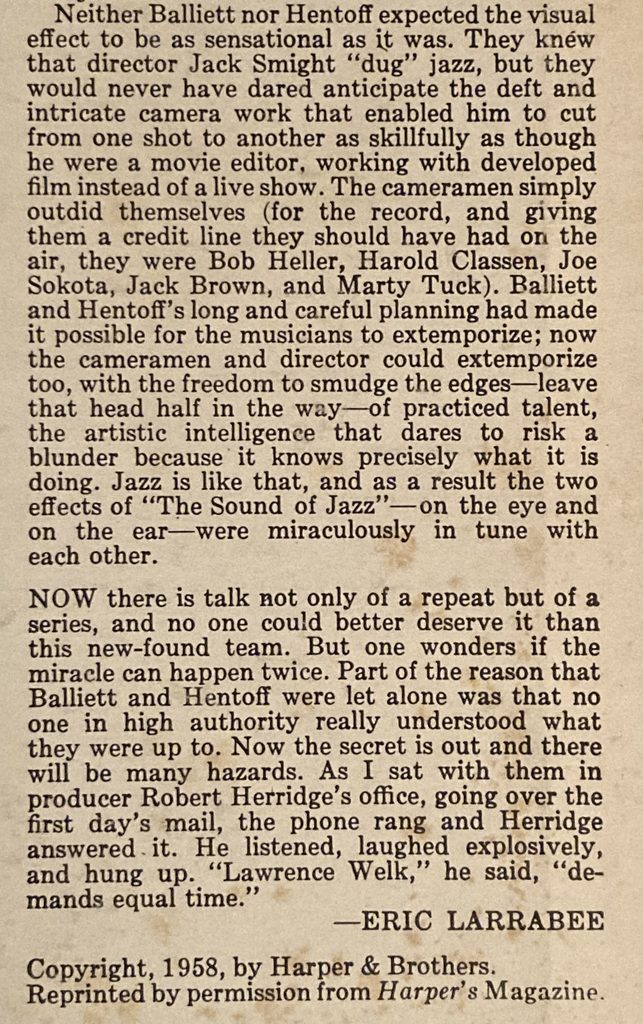
The best thing that ever happened to television happened on CBS between five and six in the afternoon on Sunday, December 8. At least that was where and when it happened first; the pro- gram may have been run at a different hour and date in your part of the country, and if there is any justice it will be repeated, the more often the better. It was an installment in “The Seven Lively Arts” series called “The Sound of Jazz,” and as far as I’m concerned you can throw away all previous standards of comparison. This is where live television began to amount to some- thing.
It was opened and closed, and from time to time interrupted, by John Crosby as “host,” but mostly it was musicians playing jazz-in a bare studio, dressed in whatever they liked (hats, sweat shirts, it didn’t matter), smoking, talking to one another, or just walking around. Each group was introduced and then away it went, with time enough (in nearly all cases) to get the music going, while the camera roamed over the faces of participants and spectators. There were no phony or elaborate explanations. As the executive pro- ducer, Jack Houseman, remarked approvingly to the music critic Virgil Thomson, during the dress rehearsal: “This is the first program about jazz that doesn’t say it started in New Orleans and then went up the river.”
Technically “The Sound of Jazz” gave the appearance of being very (as they say on the Avenue) “primitive.” You knew that you were in a studio and that these people were being televised. If it sounded better to have a micro- phone right in front of a man’s face, there the microphone would be; and if one cameraman got in another’s way he didn’t scurry ashamedly out of it. But this impromptu effect, of course, took a deal of contriving. The musicians couldn’t be- lieve at first that hats were really okay, and Billie Holiday had to be persuaded to appear in slacks and pony-tail instead of the gown she had spe- cially planned on. The air of casualness was in fact the end product of months of work.
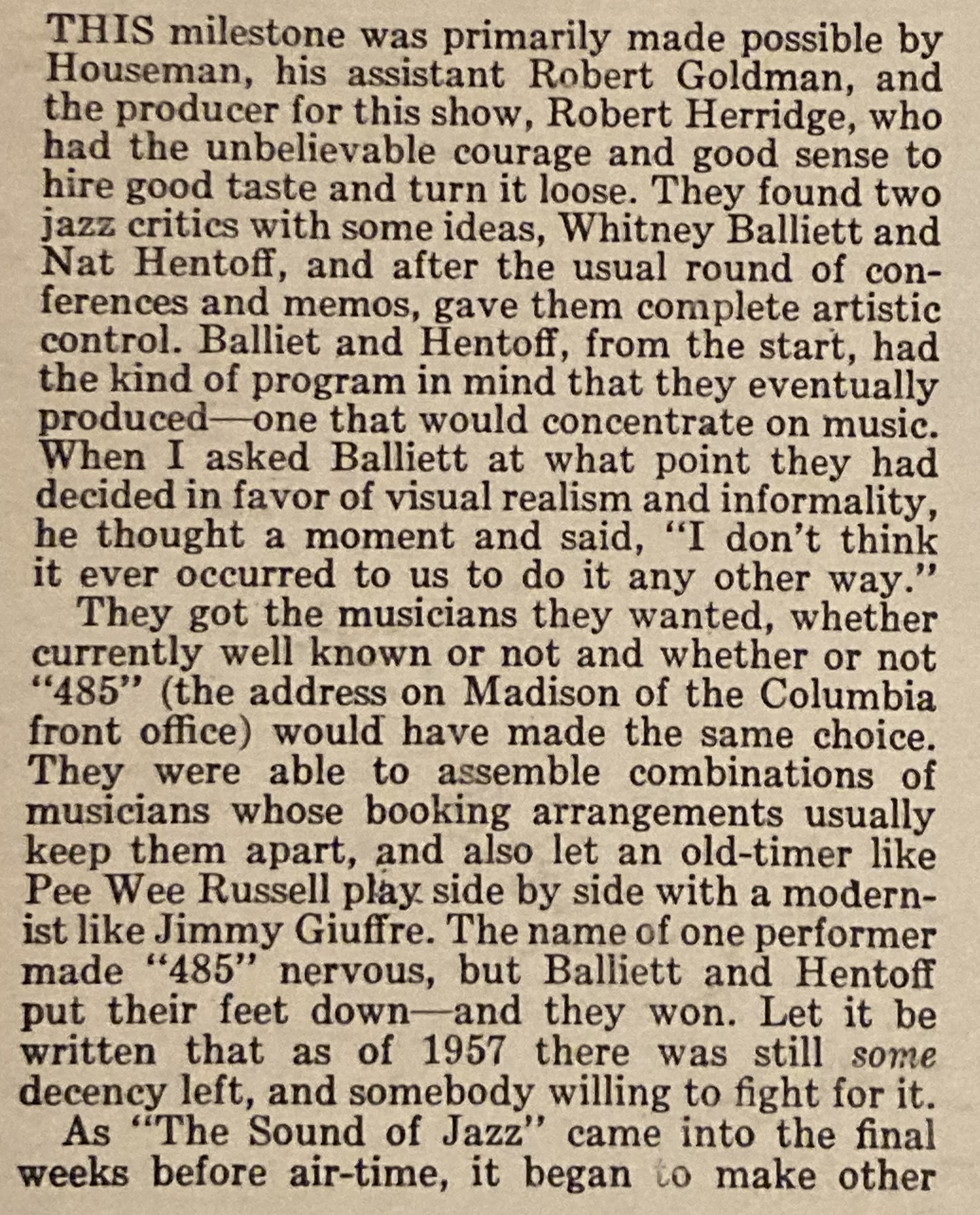
THIS milestone was primarily made possible by Houseman, his assistant Robert Goldman, and the producer for this show, Robert Herridge, who had the unbelievable courage and good sense to hire good taste and turn it loose. They found two jazz critics with some ideas, Whitney Balliett and Nat Hentoff, and after the usual round of con- ferences and memos, gave them complete artistic control. Balliet and Hentoff, from the start, had the kind of program in mind that they eventually produced one that would concentrate on music. When I asked Balliett at what point they had decided in favor of visual realism and informality, he thought a moment and said, “I don’t think it ever occurred to us to do it any other way.” They got the musicians they wanted, whether currently well known or not and whether or not “485” (the address on Madison of the Columbia front office) would have made the same choice. They were able to assemble combinations of musicians whose booking arrangements usually keep them apart, and also let an old-timer like Pee Wee Russell play side by side with a modern- ist like Jimmy Giuffre. The name of one performer made “485” nervous, but Balliett and Hentoff put their feet down-and they won. Let it be written that as of 1957 there was still some decency left, and somebody willing to fight for it.
As “The Sound of Jazz” came into the final weeks before air-time, it began to make other people uneasy, and for better reasons. Since there was so little of the normal panic on the surface, everybody panicked inside. The director, Jack Smight, found that he was twice as jumpy with- out actors around to worry about; and when “485” found out in the last few days that there really wasn’t any script to speak of it began to
emit angry noises: “What are you doing down there?” Balliett and Hentoff could only answer that everything was going to be fine, the musi- cians would turn up, and there would be some music. They hoped this was true.
THEY needn’t have worried. If you were lucky enough to have seen “The Sound of Jazz” I don’t have to tell you how great it was and, even if you weren’t, what I’d want to do anyway is sell you an explanation of why it was great. The cornerstone of live television, class will please now repeat, is the human face-with its spon- taneity and tension, its halo of contradictions, its hints of life lived and life to come. Of course the TV camera is merciless; it draws on the person behind the face for all the resources that it can find there. It is not one eye but millions of eyes; it has high expectations and asks that the person before it be poised in the balance, somehow challenged or tested, so as to bring forth the most meanings from the ever-changing interplay of expressions in the face.
What made the jazz musicians extraordinary, when the camera put their features through its harsh examination, was how much it found there. Children and animals make the best movie actors, as Douglas Fairbanks said, because they are un- self-conscious and unable to fake. No more could these musicians be anything but themselves, for they are committed to independence and to a headlong attack on the cosmos. It showed; here- and no kidding-were individuals of stature and profundity, of flesh and substance, of warmth and bite. The music was good, yes, but what lifted “The Sound of Jazz” to a level hitherto un- attained was the sight of it being made. As a lady in White Plains sat down and wrote CBS as soon as the show was over, one so seldom has the chance “to see real people doing something that really matters to them.”
Neither Balliett nor Hentoff expected the visual effect to be as sensational as it was. They knew that director Jack Smight “dug” jazz, but they would never have dared anticipate the deft and intricate camera work that enabled him to cut from one shot to another as skillfully as though he were a movie editor, working with developed film instead of a live show. The cameramen simply outdid themselves (for the record, and giving them a credit line they should have had on the air, they were Bob Heller, Harold Classen, Joe Sokota, Jack Brown, and Marty Tuck). Balliett and Hentoff’s long and careful planning had made it possible for the musicians to extemporize; now the cameramen and director could extemporize too, with the freedom to smudge the edges-leave that head half in the way of practiced talent, the artistic intelligence that dares to risk a blunder because it knows precisely what it is doing. Jazz is like that, and as a result the two effects of “The Sound of Jazz”-on the eye and on the ear-were miraculously in tune with each other.
NOW there is talk not only of a repeat but of a series, and no one could better deserve it than this new-found team. But one wonders if the miracle can happen twice. Part of the reason that Balliett and Hentoff were let alone was that no one in high authority really understood what they were up to. Now the secret is out and there will be many hazards. As I sat with them in producer Robert Herridge’s office, going over the first day’s mail, the phone rang and Herridge answered it. He listened, laughed explosively, and hung up. “Lawrence Welk,” he said, “de- mands equal time.”
-ERIC LARRABEE
Copyright, 1958, by Harper & Brothers.
Reprinted by permission from Harper’s Magazine.
<裏ジャケ和訳>
テレビ史上最高の出来事は、12月8日(日)の午後5時から6時にかけてCBSで起こりました。少なくとも、それが最初に起きた場所と時間です。お住まいの地域では放送日時が異なっていたかもしれませんが、もし公平な判断がなされるなら、この番組は再放送されるべきですし、回数は多ければ多いほど良いでしょう。それは『ザ・セブン・ライブリー・アーツ(The Seven Lively Arts)』というシリーズの一編で、『ザ・サウンド・オブ・ジャズ(The Sound of Jazz)』と題された番組でした。私に言わせれば、これまでの比較基準などすべて捨ててしまって構いません。これこそが、ライブ・テレビジョン(生放送)が真の価値を持ち始めた瞬間だったのです。
番組の冒頭と結び、そして折に触れての進行役(ホスト)を務めたのはジョン・クロスビーでしたが、その内容は大部分、ミュージシャンたちがジャズを演奏する姿で構成されていました。彼らは何もないスタジオで、思い思いの服装(帽子やスウェットシャツなど、何でもあり)をし、タバコを吸い、互いに言葉を交わし、あるいはただ歩き回ったりしていました。各グループが紹介されるとすぐに演奏が始まり、音楽を十分に展開させるだけの時間(ほとんどの場合)が確保され、その間、カメラは出演者や観客の顔を捉えて動き回りました。わざとらしい説明や凝った演出など一切ありませんでした。エグゼクティブ・プロデューサーのジャック・ハウスマンが、リハーサル中に音楽評論家のヴァージル・トムソンに対して満足げに語ったように、「これは、ジャズがニューオーリンズで始まり、川を遡って広がっていった……といった説明をしない、初のジャズ番組」だったのです。
技術的な面で見ると、『ザ・サウンド・オブ・ジャズ』は、業界用語で言うところの「プリミティブ(素朴で未洗練)」な印象を与えるものでした。そこがスタジオであり、出演者たちがテレビで放送されているのだということがはっきりと分かりました。演奏者の顔のすぐ前にマイクを置くのが音響的に最善なら、迷わずそこにマイクが置かれましたし、あるカメラマンが別のカメラマンの邪魔になっても、恥ずかしそうに慌てて退くようなことはしませんでした。しかし、こうした即興的な雰囲気を作り出すには、もちろん多大な工夫が凝らされていました。ミュージシャンたちは最初、帽子をかぶったままで本当にいいのか信じられませんでしたし、ビリー・ホリデイも、とっておきのガウンを着るつもりだったのを説得され、スラックスにポニーテールという姿で出演することになったのです。あの気取らない雰囲気は、実は何ヶ月にもわたる準備の末に生み出されたものだったのです。この画期的な番組の実現は、主にハウスマン、その助手ロバート・ゴールドマン、そしてプロデューサーのロバート・ヘリッジの尽力によるものでした。彼らは、優れたセンスを持つ人間に仕事を任せ、その才能を自由に発揮させるという、驚くべき勇気と賢明さを持ち合わせていたのです。彼らは、独自の構想を持つジャズ評論家、ホイットニー・バリエットとナット・ヘントフに白羽の矢を立て、一通りの打ち合わせや連絡のやり取りを経た後、番組の芸術面に関する全権を彼らに委ねました。バリエットとヘントフは当初から、最終的に作り上げたような、音楽そのものに焦点を当てた番組を構想していました。映像におけるリアリズムや、気取らない自然な雰囲気を採用しようと決めたのはどの時点だったのかと私がバリエットに尋ねると、彼は少し考えてからこう言いました。「それ以外のやり方をするなんて、思いつきもしなかったと思いますよ」。彼らは、世間的な知名度や、コロンビア・レコードの本社(マディソン・アベニュー485番地にあったため、社内では「485」と呼ばれていました)が選ぶであろう人物かどうかといったことにはお構いなしに、自分たちが望むミュージシャンを起用しました。通常なら共演の機会がないようなミュージシャン同士を組み合わせたり、ピー・ウィー・ラッセルのようなベテランとジミー・ジュフリーのようなモダニストを並んで演奏させたりすることも実現させたのです。ある出演者の名前が「485」の幹部たちを不安にさせましたが、バリエットとヘントフは譲らず、最終的に彼らの主張が通りました。ここに記しておきましょう。1957年当時、まだ良識というものが残っており、それを守るために戦おうとする人々がいたということを。
放送日が数週間後に迫るにつれ、『ザ・サウンド・オブ・ジャズ』は周囲の人々を不安にさせ始めましたが、それにはもっともな理由がありました。表面的にはいつものようなパニックが見られなかった分、誰もが内心では動揺していたのです。演出家のジャック・スマイトは、気にかけるべき俳優がいないことで、かえって神経質になっている自分に気づきました。また、放送直前になって「485」側が、まともな台本など実際には存在しないことを知ると、彼らは怒りの声を上げ始めました。「現場で一体何をしているんだ?」と。バリエットとヘントフは、「すべて順調です。ミュージシャンはちゃんと集まりますし、音楽も演奏されます」と答えるしかありませんでした。彼らは、それが本当にそうなることを願っていたのです。
彼らが心配する必要などなかった。『サウンド・オブ・ジャズ(The Sound of Jazz)』を幸運にも目撃した人なら、それがどれほど素晴らしいものだったか説明するまでもないだろう。たとえ見ていなかったとしても、なぜそれが素晴らしかったのか、その理由をぜひともお伝えしたいと思う。テレビの生放送における要(かなめ)――さあ、皆さん、ここを復唱してください――それは「人間の顔」にある。そこには自発性と緊張感、矛盾が織りなす光の輪、そしてこれまでの人生とこれからの人生の気配が宿っているからだ。もちろん、テレビカメラは容赦がない。顔の奥にある人間性から、引き出せる限りの要素を吸い上げようとする。それは単なる一つの目ではなく、何百万もの目なのだ。カメラは高い期待を寄せ、被写体となる人物に、ある種の均衡を保ちつつ、何らかの挑戦や試練に直面しているような状態を求める。そうすることで、絶えず変化する表情の相互作用から、最大限の意味を引き出そうとするのである。
カメラが彼らの顔立ちを厳しく吟味した際、このジャズ・ミュージシャンたちを並外れた存在にしていたのは、そこから見出されたものの多さだった。ダグラス・フェアバンクスが言ったように、子供や動物は最高の映画俳優になり得る。なぜなら、彼らは自意識に縛られず、演技で取り繕うことができないからだ。このミュージシャンたちもまた、ありのままの自分であること以外は不可能だった。彼らは自立を貫き、宇宙に向かって猛然と挑みかかるような生き方をしているからである。その姿勢は画面に表れていた。そこには――冗談抜きで――堂々たる風格と深み、生身の肉体と実体、そして温かみと鋭さを備えた個人がいたのだ。もちろん音楽も素晴らしかったが、『サウンド・オブ・ジャズ』をそれまで到達したことのない高みへと押し上げたのは、音楽がまさに生み出されていくその光景だった。番組終了後すぐにホワイト・プレインズのある女性がCBSに手紙を書いたように、「自分たちにとって本当に大切なことに打ち込む生身の人間を見る」機会など、めったにあるものではないのだから。
バリエットもヘントフも、映像効果がこれほどセンセーショナルなものになるとは予想していなかった。彼らは監督のジャック・スマイトがジャズを深く理解していることは知っていたが、彼がこれほど巧みで複雑なカメラワークを見せるとまでは想像もしていなかっただろう。スマイトはまるで映画の編集技師のように――生放送ではなく現像済みのフィルムを扱っているかのように――巧みにショットを切り替えていったのである。カメラマンたちはまさに期待以上の仕事をした(念のため、そして本来なら放送時にクレジットされるべき彼らの名を挙げておくと、それはボブ・ヘラー、ハロルド・クラッセン、ジョー・ソコタ、ジャック・ブラウン、そしてマーティ・タックの各氏である)。バリエットとヘントフによる綿密かつ長期にわたる計画のおかげで、ミュージシャンたちは即興演奏を行うことができた。そして今や、カメラマンやディレクターもまた即興的に動くことができたのだ。彼らには、あえて「輪郭をぼかす」ような自由があった――熟練の才能を捉える際、あえて顔を半分隠すような構図をとることもあれば、失敗のリスクを冒すこともあった。それは、自らのなすべきことを正確に理解しているからこそ可能な、芸術的知性による判断だった。ジャズとはそういうものだ。その結果、『サウンド・オブ・ジャズ』がもたらす視覚と聴覚への二つの効果は、奇跡的なまでに調和していた。
今や、再放送だけでなくシリーズ化の話も持ち上がっている。この新たなチームほど、それにふさわしい存在はいないだろう。だが、果たして二度目の奇跡が起こるだろうか。バリエットとヘントフが自由にやらせてもらえた理由の一つは、上層部の誰も彼らのやろうとしていることを本当には理解していなかったからだ。しかし今やその秘密は露見し、多くの障害が待ち受けていることだろう。プロデューサーのロバート・ヘリッジのオフィスで彼らと共に初日の反響メールに目を通していたとき、電話が鳴り、ヘリッジが受話器を取った。彼は相手の話を聞き、豪快に笑ってから電話を切った。「ローレンス・ウェルクだよ」と彼は言った。「彼も『同等の放送時間』を要求してきたんだ」
―エリック・ララビー
Copyright, 1958, by Harper & Brothers.
Reprinted by permission from Harper’s Magazine.
※訳文の制作にはGoogleドライブとGoogle翻訳のお世話になりました。
コメント